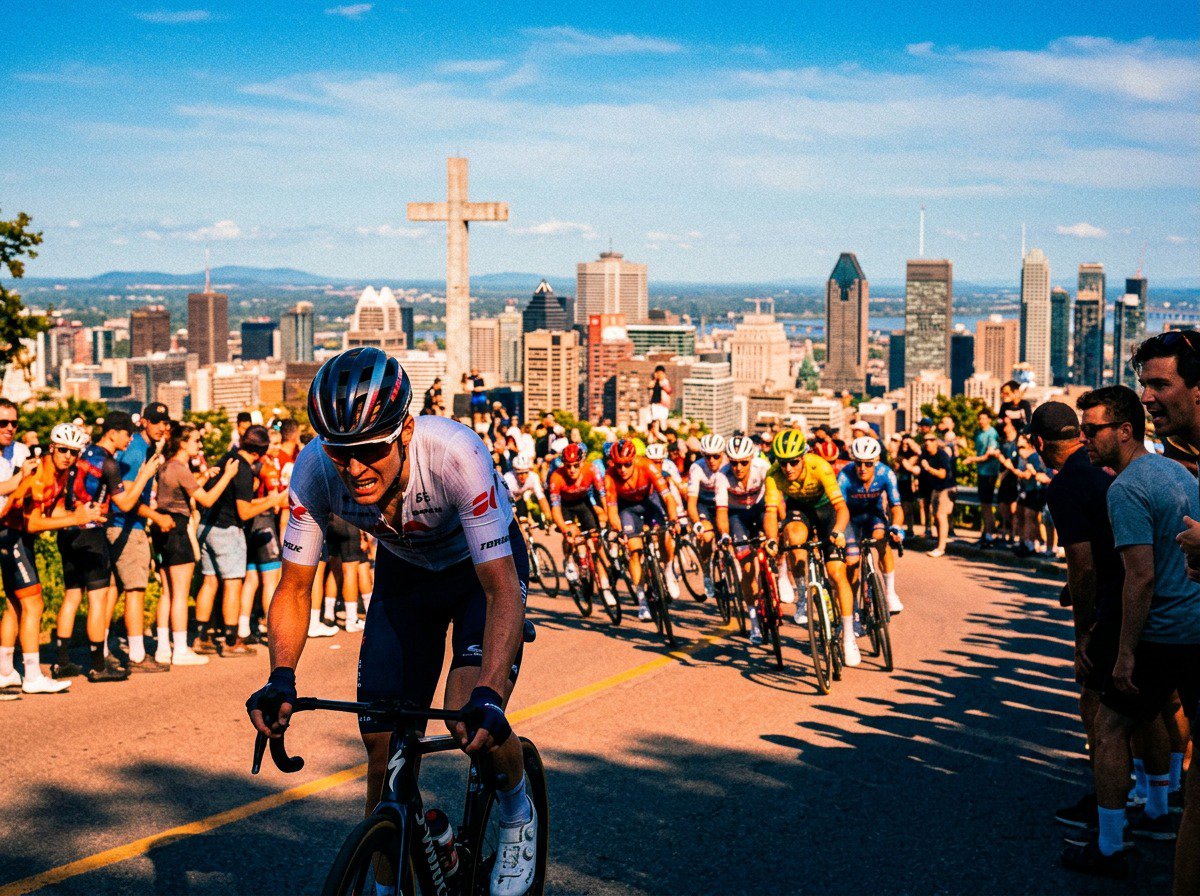
Ten seconds. That was all Brandon McNulty had left between himself and a group of the world’s best riders as the 2026 Cycling World Championships men’s road race entered its final 10 kilometres. He had attacked alone more than 30 kilometres earlier. Now, on Montréal’s last punishing circuit, the chase was almost on his wheel.
McNulty did not get caught. On September 27, 2026, the American crossed the line alone to become the first US winner of the elite men’s road world title since 1993. Michael Matthews took silver for Australia, 13 seconds behind, with the Netherlands’ Mathieu van der Poel third. That neat result hides a race that refused to settle until the final metres, as the UCI’s account of the championship finale makes clear.
The early break looked safe, until Montréal started asking questions
The race began in Brossard and finished in Montréal after 273.4 kilometres. Its defining test was not one mountain but repetition: 12 laps of a 13.4-kilometre circuit around Mont Royal, with the Voie Camillien-Houde climb waiting each time. By the finish, the riders faced approximately 3,803 metres of climbing, according to the UCI.
A 16-rider breakaway went clear early and built a lead of around eight minutes. For a while, that gap gave the race a familiar shape. France then lifted the pace as the field reached the finishing circuit, gradually bringing the escape within reach. The real uncertainty was still ahead. Each ascent took a little more out of the riders who would eventually decide the title.
Van der Poel attacks, and the favourites scatter
With around 87 kilometres remaining, Wout van Aert attacked and a dangerous group formed. Van der Poel pressed harder. Quinn Simmons and Oscar Onley held on when he split the front of the race, and Primož Roglič later made it across. Behind them, Isaac del Toro and Paul Seixas kept driving the pursuit.
For a stretch, Van der Poel looked capable of turning a chaotic race into his race. But every move brought another response. The groups split, rejoined, and split again. By 35 kilometres to go, a group of 12 had come back together near the front. The attacks had exhausted the favourites without giving any of them control.
That was McNulty’s opening.
One American goes. The other Americans make the chase harder.
McNulty accelerated away with roughly 33 kilometres to race. He did not wait for company. He settled into a solo effort while the riders behind attacked one another instead of building a steady pursuit. His advantage grew beyond a minute. At the start of the final lap, it was 53 seconds.
But this was more than one rider’s gamble. Simmons had already spent valuable kilometres in the dangerous move with Van der Poel. As McNulty rode alone, Matteo Jorgenson remained in the chase, responding to threats rather than helping bring back his teammate. In USA Cycling’s race account, Jorgenson described the team’s plan as putting the American result ahead of individual ambitions. McNulty’s solo was spectacular. The space around it was a team effort.
Then the numbers began to turn against him.
Fifty-three seconds become ten
Remco Evenepoel’s move had helped cut McNulty’s lead before the final lap. The chasers kept coming on the last ascent of the Voie Camillien-Houde. By the final 10 kilometres, the gap was down to 10 seconds. A lead that had looked decisive had become one acceleration away from disappearing.
McNulty was hurting. The riders behind could see the title slipping away from him and toward them. But seeing a lone leader is not the same as catching him. The chase could not sustain the one collective effort it needed. Jorgenson continued to cover moves, and McNulty kept pushing over the remaining kilometres.
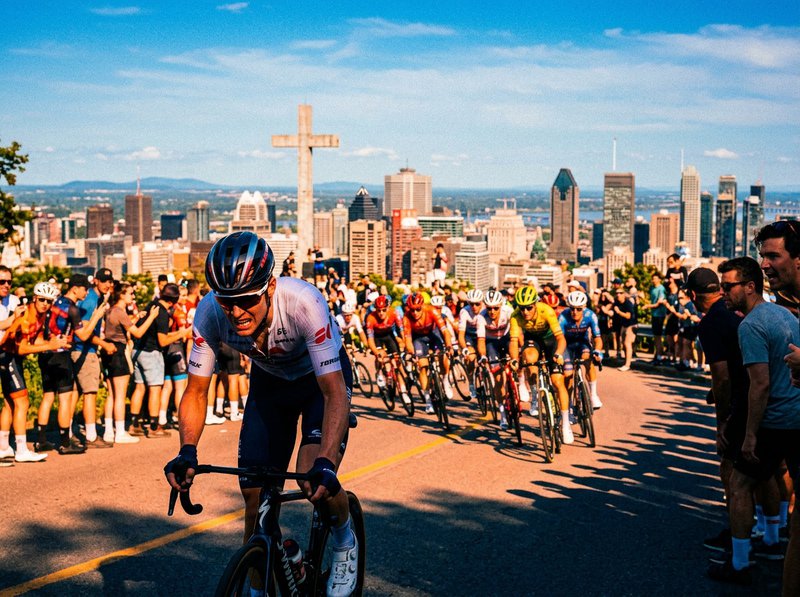
He reached the uphill finish alone. Matthews won the sprint for second ahead of Van der Poel. Simmons finished fourth, underlining how deep the American challenge had been. The official UCI championship page carries the event results.
Afterward, McNulty admitted he had not believed the victory was secure even in the final few hundred metres. It is the detail that makes the finish: the new world champion was still fighting to believe what the rest of Montréal was watching happen.
Why this upset will last
The surprise was not simply that McNulty won. It was how he won: after the favourites had attacked, after the lead had stretched beyond a minute, and after it had collapsed to almost nothing. Ten seconds from being caught, he found enough road to make history.
At the line, the rainbow jersey belonged to the rider who went alone, and to the teammates who made sure the chase never had an easy answer.
Leave a Reply